Primo Levi
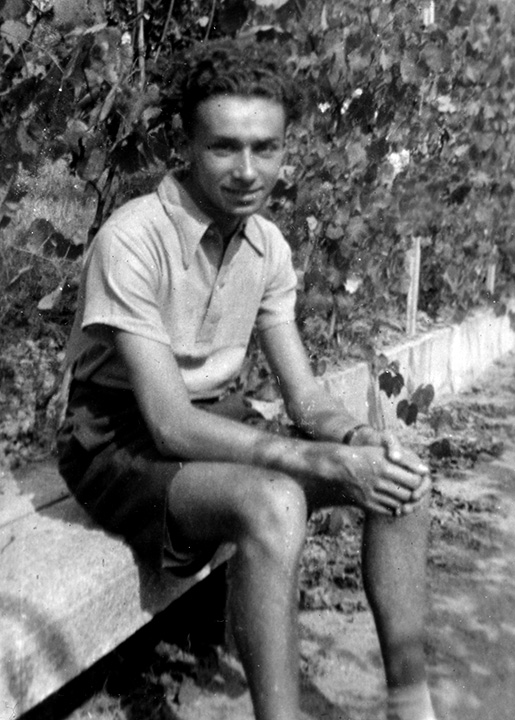
Primo Levi was born in Torino in 1919 and died there in 1987. His father Cesare was an engineer who worked for Gantz, an electric company in Budapest and in Torino. His mother Ester Luzzati was the daughter of a cloth merchant.
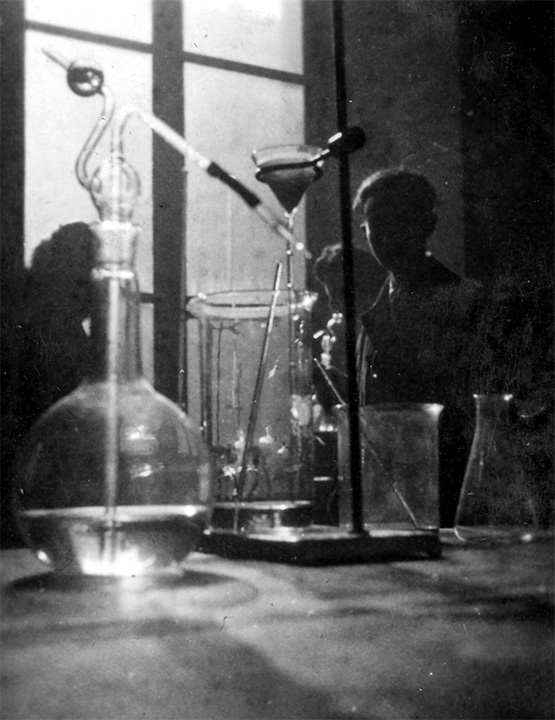
He earned his university degree in Chemistry in 1941. Because of the 1938 racial laws, he could not work on an experimental thesis in Chemistry, but he did manage to write an experimental sub-thesis in Physics. Despite the racial laws, he found positions in several companies, including Wander, and in an asbestos mine in Balangero. After the September 8 1943 armistice, he joined a group of partisans active in Aosta Valley, but was arrested December 13 near Brusson.
At that time Levi declared that he was “of the Jewish race” and was sent to the concentration camp at Fossoli near Carpi. There, in February 1944, he was loaded onto a railroad convoy headed towards the Auschwitz concentration camp in Poland.
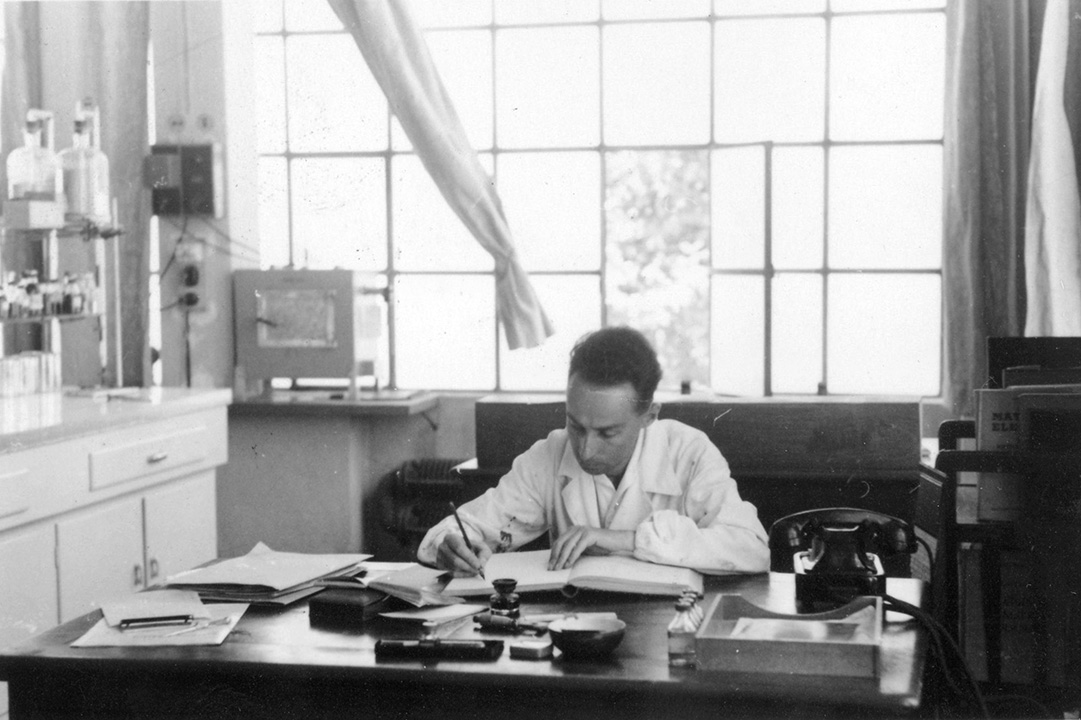
It was at Buna-Monowitz, a subsection of the concentration camp Auschwitz, where he first performed some general tasks for the construction of chemical plants dedicated to producing synthetic rubber and was employed in a chemistry laboratory after passing a chemistry exam in German.
He was liberated by the Soviet Army at the end of January 1945 and in June he began his journey home through several countries in eastern Europe, arriving in Torino in October. He immediately began to write about the concentration camps. In 1947 he had his resulting book, “Se questo è un uomo” (If This is a Man), published by De Silva. After various attempts to find a position as a chemist, he began to work for SIVA, a paint factory located first in Torino and then in Settimo Torinese.
He eventually became General Manager at Siva and directed the company to specializing in the field of insulating resins for copper magnet wire. In 1958 a new edition of “Se questo è un uomo” (If This is a Man) was published by Einaudi. In 1963, The Truce, the story of Levi’s return from Auschwitz was published. In 1966 he collected a series of science fiction stories into a volume entitled “Storie Naturali” (Natural Histories) under the pseudonym, Damiano Malabaila.
The “Sistema Periodico” (Periodic Table) came out in 1975, a twenty-one story autobiography, each of which was named after an element of Mendeleev’s Periodic Table. In 1978 he published “La chiave a stella” (The Wrench), a novel about a Piedmontese rigger. In 1982 he published “Se non ora, quando?” (If Not Now, When?), a story about a band of Russians and Poles who fought against the Nazi invaders between July 1943 and August 1945.
In 1986 his last book, “I sommersi e i salvati” (The Drowned and the Saved), was released, a synthesis of his lifelong reflections on his concentration camp experiences. His books have been translated into more than 50 languages. In 2015 The Complete Works of Primo Levi were published in the United States.